Part of our complete guide: Levada walks on Madeira
What the grade measures
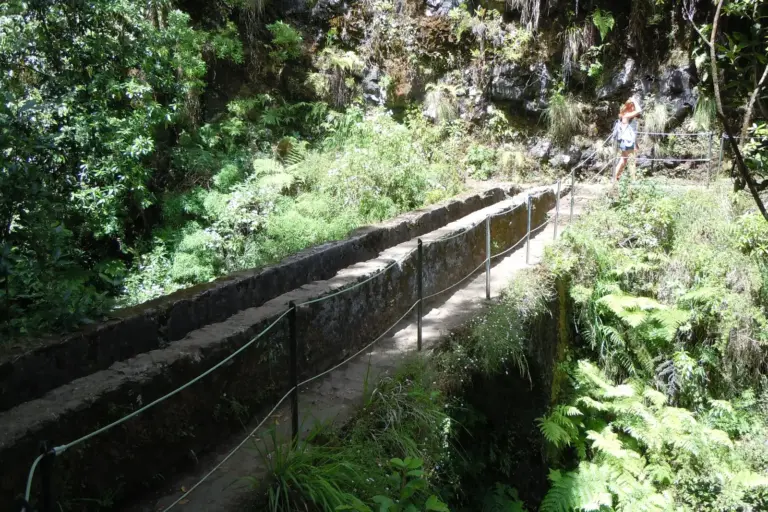
The classification comes from the IFCN. The boards at the start and finish give length, ascent, walking time and a difficulty grade. How that grade is arrived at in detail is not published by the IFCN — exposure, surface and navigation therefore need separate research. A path can run six level kilometres and still be graded hard because it follows the edge for a hundred metres without a railing.
Conversely there are short routes with a serious climb that count as moderate because they are wide and secured. Reading the rating as a fitness measure gets it wrong — usually in the uncomfortable direction.
Tunnels
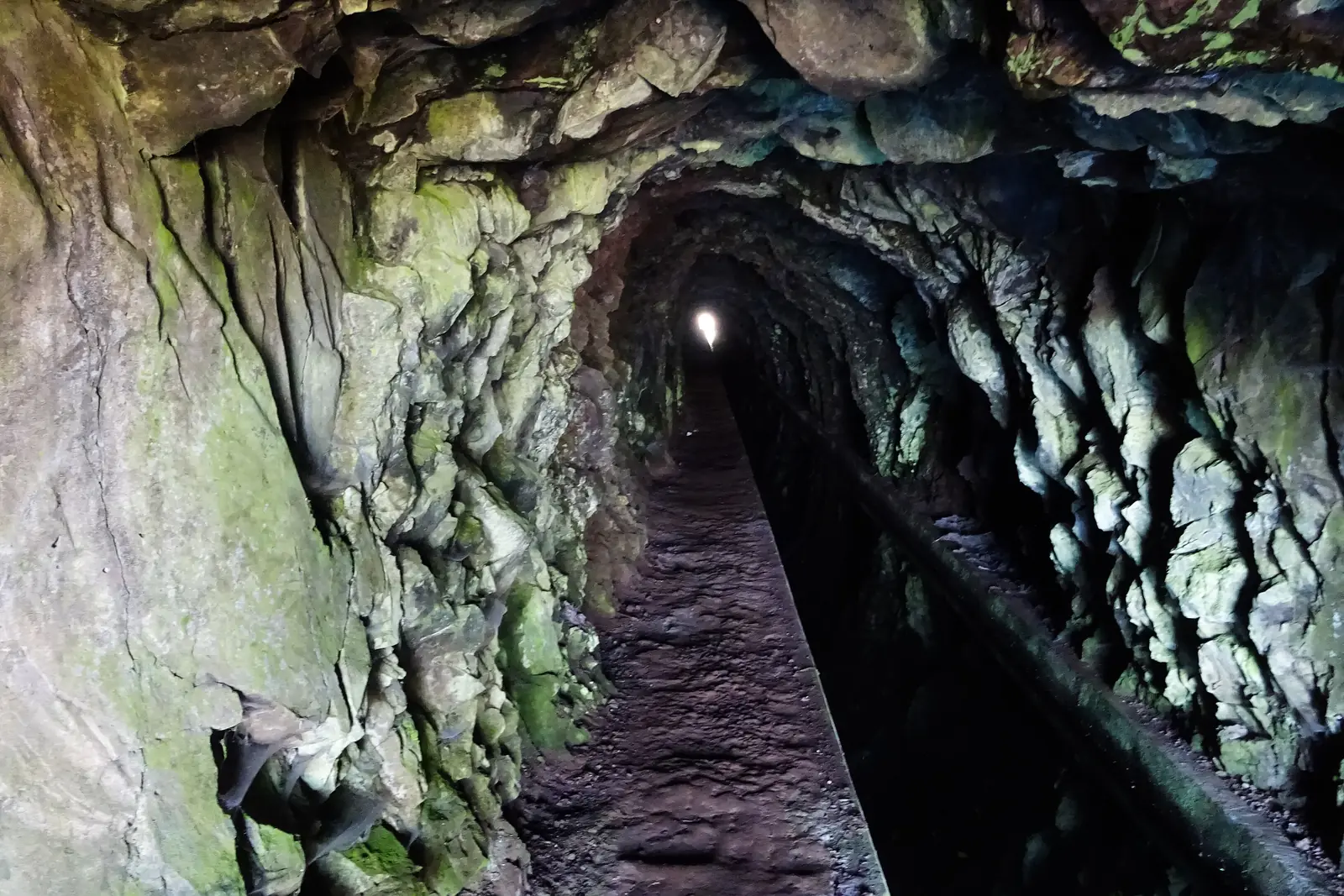
Several of the well-known routes pass through tunnels cut from the rock and left unfinished. None is lit. The height varies, the floor is wet, and water drips. Lengths run from a few metres to sections where you cannot see the far end.
In practice: a head torch rather than a phone, because your hands need to stay free. Add something on your head — the roof is lower than it looks in the dark — and shoes that grip wet rock.
What else goes in
Rain protection even under a blue sky in Funchal, because the weather on the north side is a different weather. Enough water, because there is none on the way. And an eye on the clock: it gets dark earlier in laurel forest than in the open.
What does not need to go in is expensive kit. The three things walks on Madeira actually fail on are missing light, the wrong shoes, and a forecast that applied to the other coast.
Booking mandatory since 2026
Regardless of difficulty, since January 2026 every PR trail requires a SIMplifica reservation. The grade tells you something about the path; the booking requirement tells you nothing — even the easiest waymarked route needs a booked time slot.